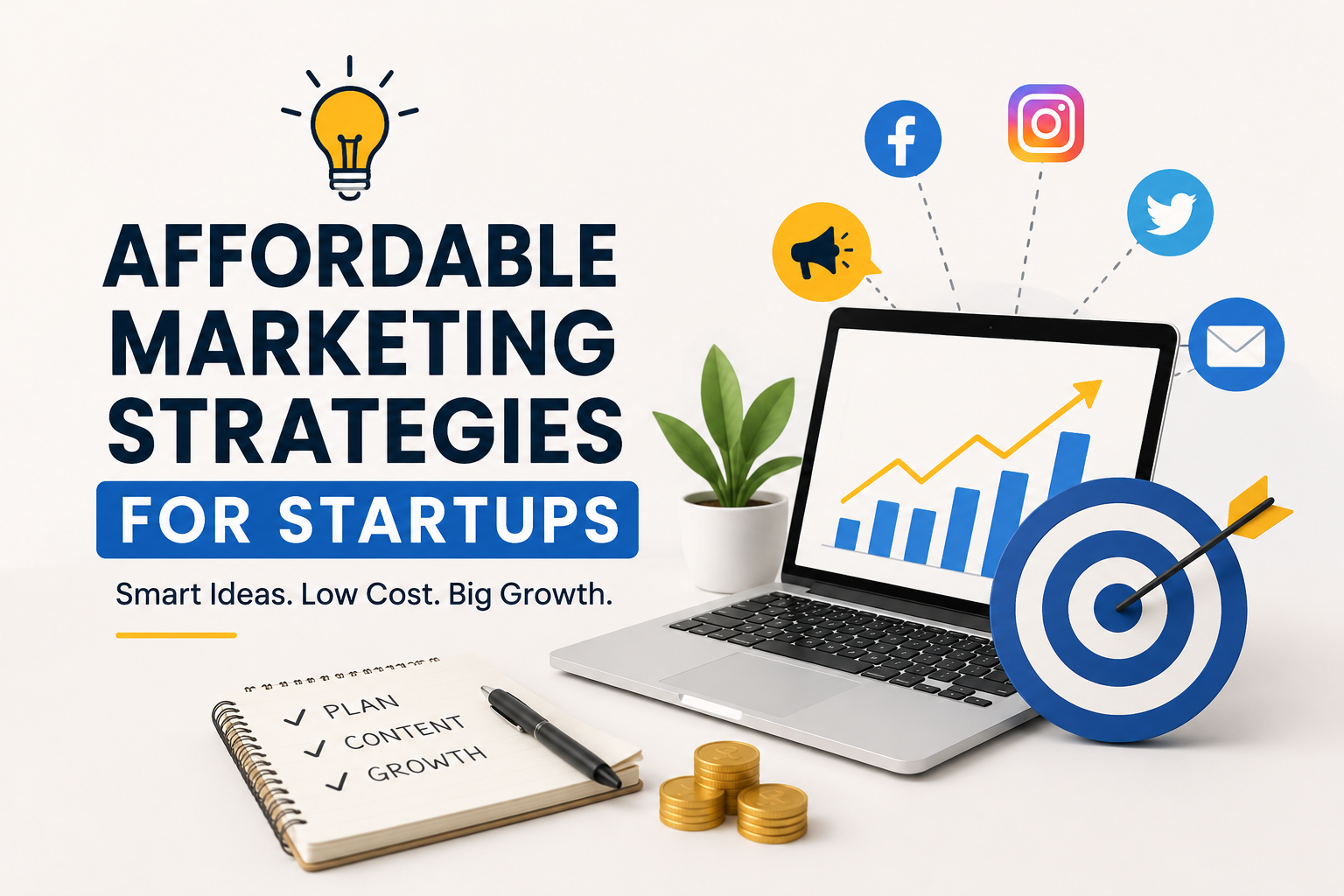
Affordable Marketing Strategies for Startups With a Small Budget: Complete Guide
Want to grow your startup without spending a fortune? Discover affordable marketing strategies for startups, including content marketing, social media tactics, SEO tips, email marketing, and practical growth methods for small budgets.
Starting a business is exciting, but attracting customers can become difficult when marketing funds are limited. Many startup founders assume they need large advertising budgets to compete with established businesses. However, that assumption is not always correct.
Many successful startups began with limited resources and used smart marketing methods instead of expensive campaigns. Learning affordable marketing strategies for startups with a small budget can help businesses attract customers, build brand awareness, and increase sales without creating financial pressure.
Marketing is not only about spending money. It is also about understanding your audience, providing value, and building relationships. Small businesses and startups often have an advantage because they can move faster, adapt quickly, and communicate more personally with customers.
This complete guide explains affordable marketing strategies, how to implement them, common mistakes to avoid, and practical methods startups can use to grow steadily.
Why Affordable Marketing Matters for Startups
Startups often operate with limited budgets. Spending excessive amounts on advertising too early can create financial challenges.
Affordable marketing strategies help businesses:
- Reduce operational costs
- Increase return on investment
- Reach targeted audiences
- Build customer trust
- Create sustainable growth
Instead of spending heavily, startups can focus on strategies that gradually build long-term results.
Before implementing tactics, continue to Building a Strong Marketing Foundation.
Building a Strong Marketing Foundation
Many startups fail because they begin promoting products before understanding who they are targeting.
Identify Your Target Audience
Ask important questions:
- Who needs your product?
- What age group are they?
- What problems do they face?
- Where do they spend time online?
- What influences buying decisions?
Create a Clear Brand Identity
Your brand includes:
- Business values
- Visual identity
- Brand voice
- Mission statement
Set Clear Marketing Goals
Examples include:
- Increase website traffic by 20%
- Gain new customers monthly
- Grow email subscribers
- Increase social media engagement
Content Marketing Strategies
Content marketing remains one of the most cost-effective strategies available.
Instead of directly selling products repeatedly, content provides value while attracting potential customers naturally.
Types of Content Startups Can Create
- Blog posts
- Videos
- Infographics
- Tutorials
- Case studies
- Guides
How to Start Content Marketing
- Identify customer problems.
- Create useful solutions.
- Publish regularly.
- Optimize content.
- Measure performance.
Content becomes more effective when combined with Search Engine Optimization Strategies.
Search Engine Optimization Strategies
SEO helps websites appear in search results without paying for advertisements.
Use Relevant Keywords
Find terms people search for related to your products or services.
Create Quality Content
Search engines prioritize useful information.
Improve Website Speed
Slow websites can reduce user experience.
Optimize Headings
Use H1, H2, and H3 structures correctly.
Use Internal Links
Internal links improve navigation and user experience.
See how SEO supports Content Marketing Strategies.
Social Media Marketing Strategies
Social media offers startups opportunities to reach audiences without huge advertising costs.
Choose Platforms Carefully
Do not attempt to dominate every platform immediately.
Examples:
- TikTok
- X
Create Consistent Content
Examples include:
- Educational posts
- Behind-the-scenes content
- Tips
- Stories
- Customer testimonials
Engage With Audiences
Respond to comments and messages.
Email Marketing for Startups
Email marketing continues to deliver strong returns.
How to Build an Email List
- Offer valuable resources.
- Create signup forms.
- Encourage subscriptions.
Content Ideas for Emails
- Tips
- Offers
- Updates
- Announcements
Referral Marketing
Customers often trust recommendations from people they know.
Referral marketing encourages existing customers to bring new customers.
Ideas:
- Discount rewards
- Referral bonuses
- Special offers
Partnership Marketing
Partnerships allow startups to access larger audiences.
Examples:
- Joint promotions
- Collaborative events
- Guest content
- Cross-promotion
Community-Based Marketing
Communities create stronger customer relationships.
Places to Build Communities
- Facebook groups
- Online forums
- Local events
- Industry communities
Customer Retention Strategies
Keeping customers often costs less than finding new customers.
Ways to Improve Retention
- Provide good customer service
- Request feedback
- Offer rewards
- Maintain communication
Common Startup Marketing Mistakes
Trying Every Platform
Focus on platforms where your audience exists.
Ignoring Analytics
Measure results regularly.
Expecting Immediate Results
Marketing requires consistency.
Ignoring Customers
Listen carefully to feedback.
Frequently Asked Questions
What is the cheapest marketing strategy?
Content marketing and SEO often provide affordable long-term results.
Can startups compete with larger businesses?
Yes. Startups often move faster and communicate more personally.
How long before results appear?
Results vary depending on strategy and consistency.
Conclusion
Using affordable marketing strategies for startups with a small budget helps businesses grow sustainably without spending large amounts of money.
Focus on understanding customers, creating useful content, building relationships, and improving continuously.
Small actions repeated consistently often create large results over time.